Iceni 360: big skies, long nights and a different kind of ultra
East Anglia might not be the obvious destination for an ultra-distance cycling event, but the inaugural Iceni 360 demonstrated that you don't need mountains to find adventure. Alec Seaman joined All Pace Races for a weekend of gravel, mud, sand, darkness and a rather different approach to endurance cycling.
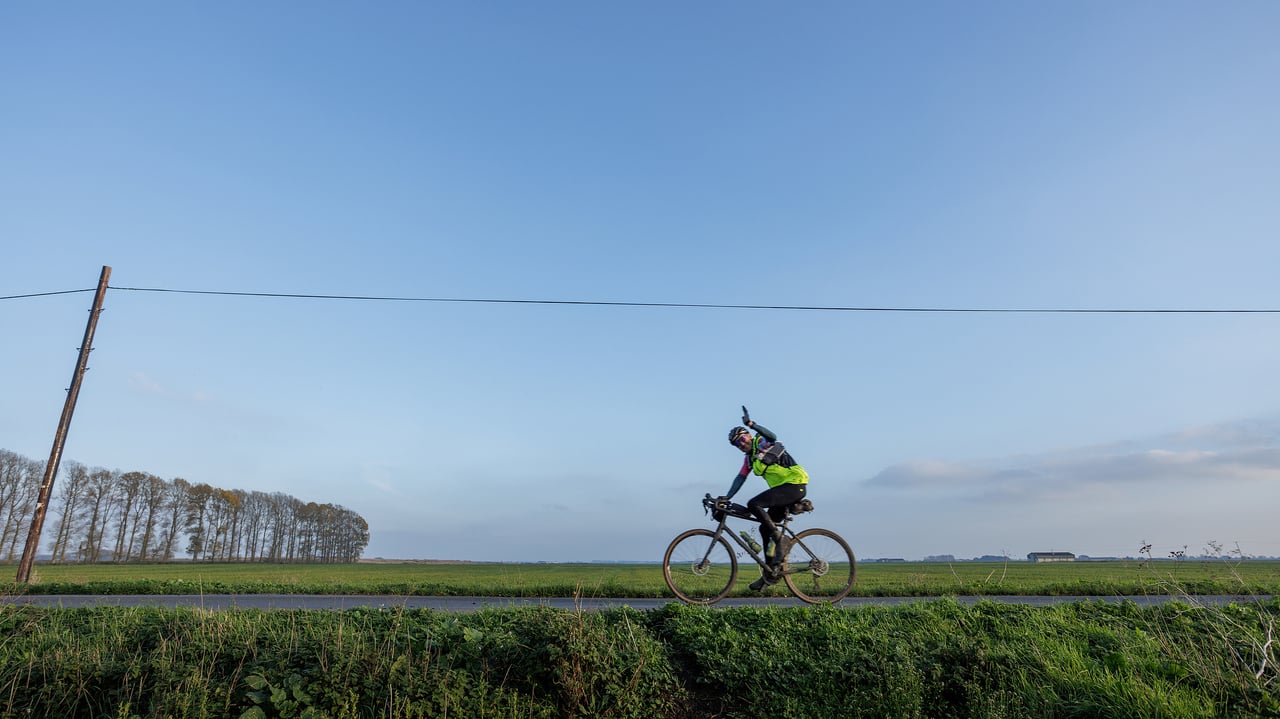
Alec Seaman has photographed All Pace Races events on commission, including the Norfolk 360 in April 2025.
I've always said that you underestimate East Anglia at your peril. The sagas tell us that it was once one of the most mountainous regions in Europe, but the wind blew all the mountains flat and hasn't stopped blowing since.
Joking aside, the landscape presents its own challenges. Long, gradual rises, barely perceptible to the eye, can sap your strength over miles of pedalling. Across the exposed farmland of the Fens, there is often little shelter from the wind, which can make even the flattest stretch of gravel feel like a climb, all without the reward of a descent.
Fortunately for those tackling the inaugural Iceni 360, the weather was remarkably clement for the time of year. Aside from the fog that greeted riders at the start and returned overnight, conditions were largely favourable. Most notably, the wind was virtually non-existent, a rare occurrence in this part of the country. The riders made the most of it, enjoying clear skies and autumn sunshine as they set off across the Fens.
But favourable weather didn't necessarily mean easy riding. Recent rain had left stretches of gravel and bridleway muddy and slippery, while deep sand, uneven tracks and the sheer distance offered challenges of their own.
East Anglia had given the riders a rare break with the weather. The terrain, however, was another matter.
An ultra with a safety net
The Iceni 360 is the latest creation of Tom Levy, the man behind All Pace Races and the established Norfolk 360. His approach to ultra-distance cycling is straightforward: make the experience challenging, but remove as many unnecessary barriers to participation as possible.
The format consists of four loops, each approximately 90 miles long, radiating from a central headquarters at Breckland School in Brandon, Suffolk. Together, they make up the 360-mile challenge, taking riders through Norfolk, Suffolk and Cambridgeshire.
Unlike a traditional point-to-point ultra, where participants must arrange their own food, accommodation and recovery, the Iceni 360 allows riders to return to a familiar base after each loop.
That distinction matters, especially when it comes to safety. Tom has deliberately developed the format to address some of the risks associated with unsupported ultra-distance cycling, creating a more secure and accessible environment for everyone. This is particularly relevant for those who might feel vulnerable sleeping alone in unfamiliar places, an issue Tom has been especially conscious of when considering female participation.
Sleep deprivation has become almost de rigueur in ultra-distance cycling, with riders pushing through the night and snatching a few hours' rest wherever they can. Bus shelters, roadside verges and even ditches can become makeshift bedrooms.
Not here.
The central headquarters provides a safe, secure, and warm place to rest and recover, with toilets, food preparation facilities, and space to sort equipment or change clothing. It also lets Tom and his team stay in regular contact with participants, check on their welfare, and offer assistance when needed. A recovery vehicle provides further reassurance for those unable to continue.
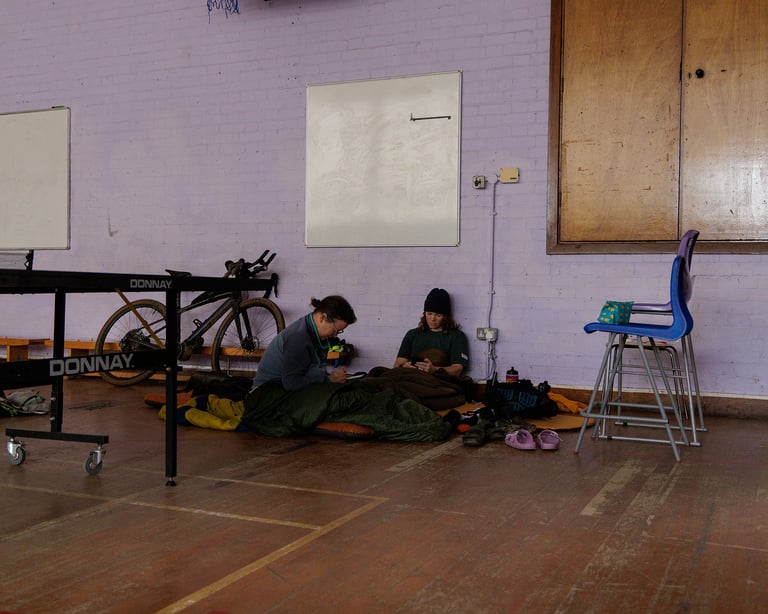 Better than a bus shelter. Photo: Alec Seaman
Of course, riders still spend long periods alone on the course, and the format cannot eliminate every risk, nor should it remove the sense of adventure. But bringing participants back to a central location at regular intervals addresses some of the vulnerabilities of the traditional approach.
Riders can choose how much of the event they want to tackle. One loop is an achievement in itself. Two or three might represent a significant personal milestone. Those looking for the full challenge can attempt all four within the time limit – all achievements will be celebrated.
That flexibility lets you explore your capabilities without committing to an isolated, multi-day expedition.
The tyranny of tyre choice
One challenge of riding in East Anglia is that the terrain rarely lets you make a perfect equipment choice.
There are few places where the flints are so sharp, the sand so deep, and the mud so cloying. Add substantial stretches of tarmac, and suddenly the question isn't which tyre will perform best, but which is the least-worst choice.
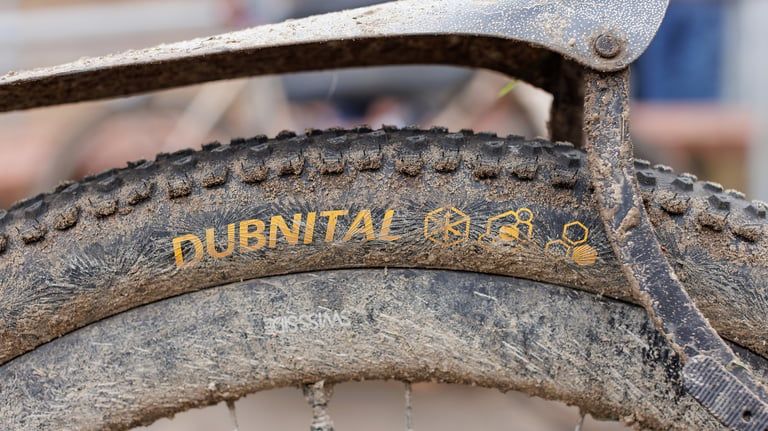 The least-worst choice, after a few miles. Photo: Alec Seaman
A fast-rolling gravel tyre might be ideal for the roads and compact surfaces of the Fens, but less appealing on deep sand or greasy, rutted tracks. Something wider, with a more aggressive tread, offers greater off-road control but demands more effort on faster road sections.
The same awful arithmetic of choice applies to the bike itself.
The first loop headed west towards Ely and Cambridge, following waterways, agricultural tracks and gravel paths. With relatively little elevation and plenty of opportunities to maintain momentum, more road-orientated gravel bikes, particularly those equipped with aerobars, appeared to offer an advantage.
The second loop, however, took riders onto the historic Peddars Way, where rutted tracks, mud and uneven surfaces presented an entirely different challenge. Here, a hardtail 29er mountain bike would almost certainly have been a welcome companion.
And the final loop, with its deep Breckland sand, provided yet another reason to question your choices. All of them.
There's no perfect tyre for the Iceni 360, and no perfect bike either. You make your choices and take your chances, accepting that an advantage in one part of the course might become a disadvantage somewhere else.
Don't underestimate the flatlands
Saturday morning began with fog hanging over Brandon. As the riders departed, the mist gradually lifted to reveal a glorious autumn day.
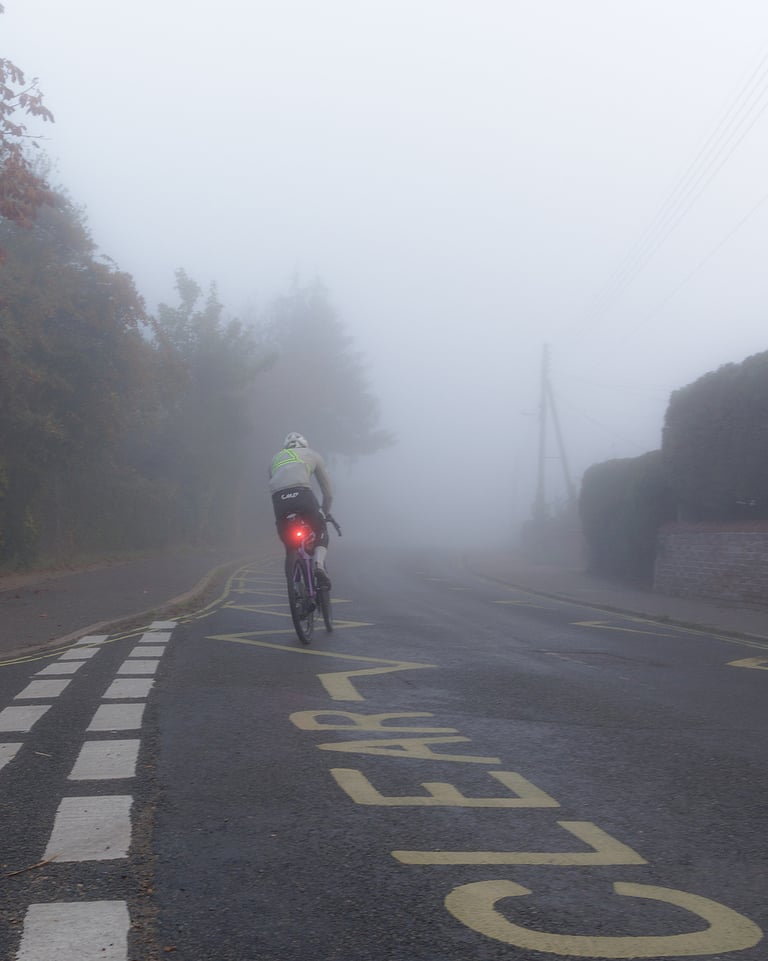 The road markings were feeling optimistic. Photo: Alec Seaman
The opening loop took riders towards Ely and Cambridge, through a landscape of waterways, agricultural tracks and expansive farmland. Ely Cathedral, the famous Ship of the Fens, dominates the surrounding countryside.
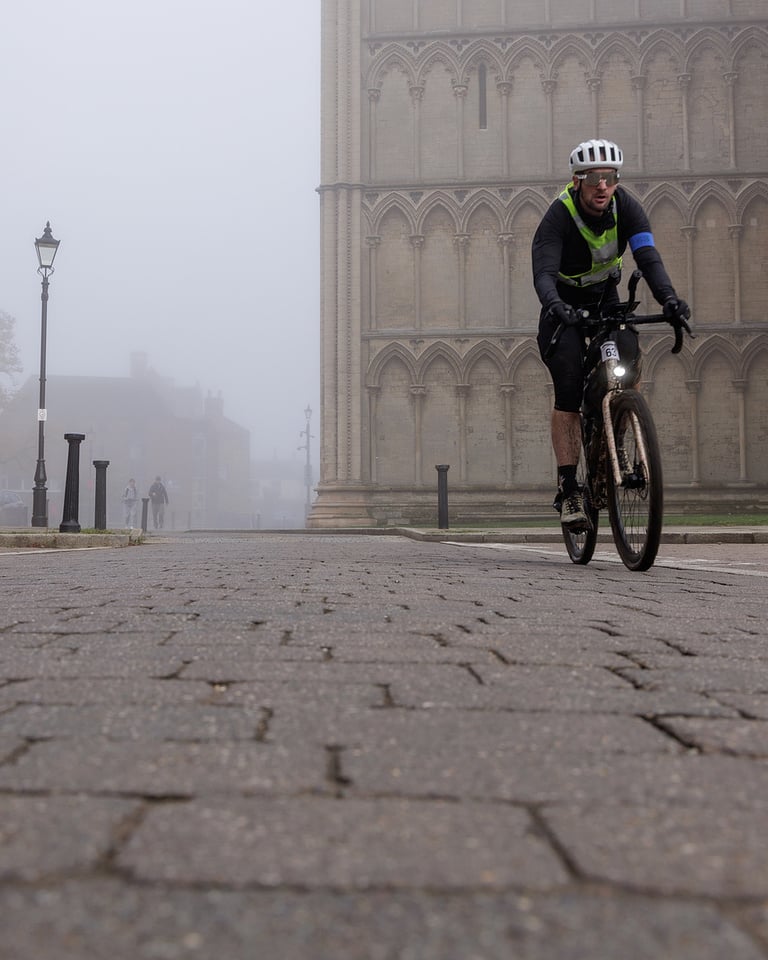 Ely Cathedral, for those who could see it. Photo: Alec Seaman
With little elevation to contend with, it would have been tempting to assume this was the easiest of the four loops. The reality proved rather different.
Recent rain had transformed sections of the route into sticky mud. Tracks that might have been fast and enjoyable during the summer had become slippery, with some riders choosing to walk sections rather than risk a fall.
Without the natural breaks provided by descending, riders can spend hours turning the pedals with little rest. Add challenging surfaces or an unsuitable tyre choice, and the kilometres become considerably harder to earn.
By the time the first riders returned to Brandon, the event had already begun to take its toll.
Richard Sharp, among the earliest to complete the opening loop, subsequently suffered a broken rear derailleur that ended his ride. Melissa Denman survived an unfortunate tumble into a ditch but continued, eventually completing her second loop.
Others arrived at headquarters ready for a break, some taking time to eat and prepare for the next stage, while those keen to make the most of the remaining daylight headed straight back out.
Into the darkness
As Saturday afternoon gave way to evening, riders began heading north on the second loop, towards Norfolk and the Peddars Way.
This ancient route cuts, like an arrow, across the Norfolk countryside, and its long, exposed sections and uneven surfaces can be challenging enough in daylight. Tackling approximately 40 kilometres of it in darkness brings an entirely different dimension to the experience.
In daylight, the landscape provides a constant stream of visual information. Landmarks, views and a sense of progress as the countryside passes by. At night, much of that disappears. Familiar objects take on strange shapes at the edge of your light, and any sense of time or distance can become difficult to judge.
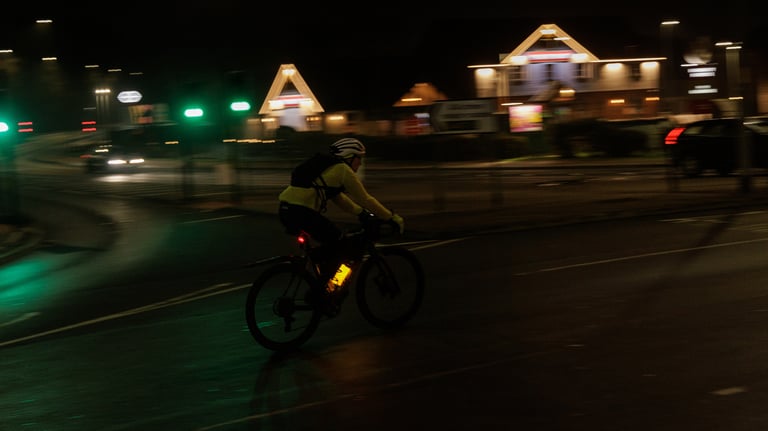 Out into the dark. Photo: Alec Seaman
There's something utterly disorienting about riding at night. Your world is reduced to a single bright spot ahead of you, with the ground flashing past, mesmerising you as your ears strain to interpret sounds in an environment that suddenly feels alien. Add the demands of prolonged riding, and the mental challenge becomes every bit as significant as the physical one.
The fog returned during the night, reducing visibility and slowly leaving the riders soaking wet despite the absence of rain.
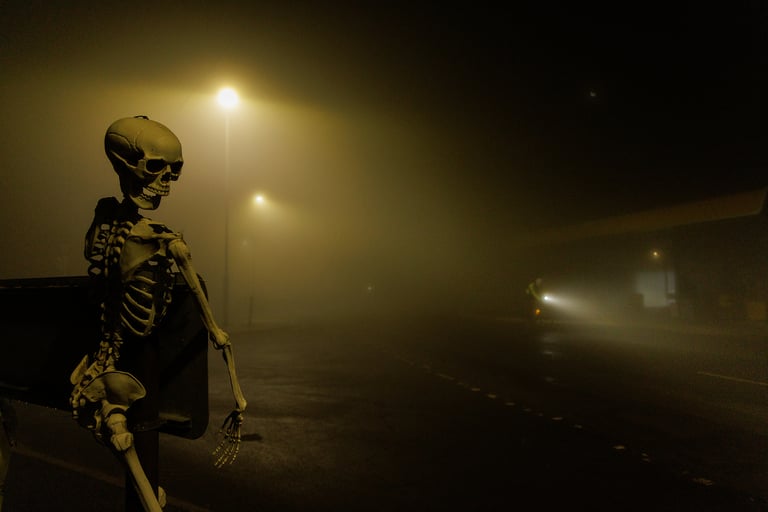 Familiar objects take on strange shapes. Photo: Alec Seaman
As Tom himself observed, it's precisely this aspect of the event that makes it so compelling:
"It's the night-time, the blackness, the riding through the night which is special."
Back at headquarters, riders adopted different approaches. Some barely paused before heading out again. Others took the opportunity to eat, change clothing, charge lights or get some sleep.
There was no universal strategy. Some preferred to keep moving, while others recognised that a few hours' rest would leave them better prepared for what lay ahead.
And this is where the central headquarters really comes into its own. Rather than searching for somewhere to sleep in the dark, riders could return to a secure environment, rest properly and make a considered decision about whether to continue.
The long way round
While most riders were negotiating their second loop, a handful had already pushed on into the third.
Jacob Dugdale, Filip Slomski and Harry Hawkridge set a blistering pace over the opening stages. Through Saturday night and into Sunday morning, the gaps between them changed as navigation, terrain and decisions about stopping influenced their progress.
Elsewhere on the course, mechanical problems brought some rides to an early conclusion, while others decided they'd achieved enough for the weekend.
Slomski completed three loops before deciding to stop. Denman, meanwhile, had continued despite her earlier fall, completing her second loop before taking a short sleep. Unfortunately, the tumble's effects then caught up with her, and she woke too stiff and sore to continue.
Those still pursuing the full distance had one more distinctly East Anglian obstacle to negotiate.
Sand.
Among veterans of Tom's other events, the very word has acquired an almost mythical reputation. It's spoken of in hushed tones by those who have experienced it, usually accompanied by a knowing smile and a few choice words about the route designer.
The final loop took riders into the Brecks, a landscape characterised by sandy soils, heathland and distinctive stands of Scots pine.
Anyone who has ridden the sandy tracks around Thetford will understand that a lack of hills offers little consolation when your tyres are sinking into the ground. After hundreds of miles, the final loop demanded patience, concentration and some careful bike handling.
What counts as finishing?
Ultimately, only three riders completed the full 360 miles within the event's time limit.
Harry Hawkridge finished with an elapsed time of 26 hours and 46 minutes, followed by Jacob Dugdale in 27 hours and 4 minutes. Farhad Timuri completed all four loops in approximately 35 hours, rounding out the trio of full-distance finishers.
Lauren Wilson and Georgie Daykin were among the female riders who travelled furthest, each completing three loops.
But looking only at the full-distance finishers misses much of what Tom is trying to achieve.
Despite the word 'Races' appearing in the organiser's name, All Pace Races does not operate these events as conventional competitions. There are no podium places, prizes for the fastest riders or UCI points on offer.
The emphasis is on participation, personal achievement and learning. Riders are encouraged to help one another, share knowledge and make sensible decisions about their routes and capabilities.
That philosophy was tested following the event when anonymous accusations of cheating emerged concerning a participant whose navigation had been affected by an incorrectly supplied GPX file.
Tom responded publicly, rejecting the accusation and reaffirming the principles on which All Pace Races was founded. His position was clear: mistakes, assistance and reasonable flexibility should not be treated as dishonesty in an event designed to help people develop their skills and confidence.
It's a distinction worth making. Competition has its place in cycling, but not every challenging ride needs to be a race.
More than the miles
One of the things I enjoy most about photographing cycling events is documenting what happens beyond the obvious sporting achievement.
The fastest riders make compelling subjects, naturally, but equally interesting stories unfold elsewhere. Someone preparing to head back into the darkness, another working through a mechanical problem, or riders sharing their experiences over a hot drink at headquarters.
These moments tell us something about the experience that a finishing time or GPS trace never can.
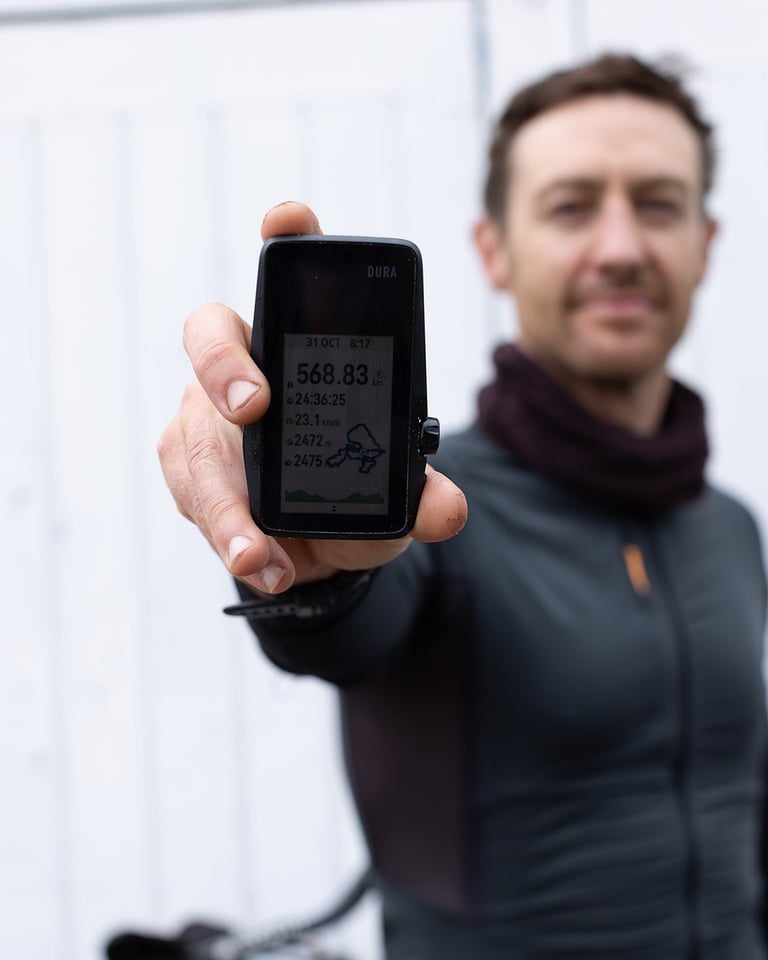 The GPS trace only tells you so much. Photo: Alec Seaman
They also explain why Tom's format works so well.
As everyone returns to a central location, a community forms during the event itself. Riders share advice, follow each other's progress and encourage one another. The distinction between experienced ultra-distance cyclists and those attempting something new becomes less important.
Tom is also unfailing in his ability to recognise the effort his riders make, regardless of how far they manage to ride.
If someone arrives having never tackled 90 miles and completes their first loop, that's an achievement worth celebrating. If somebody manages two loops when they thought one would be their limit, they've discovered something about themselves.
And his approach shows.
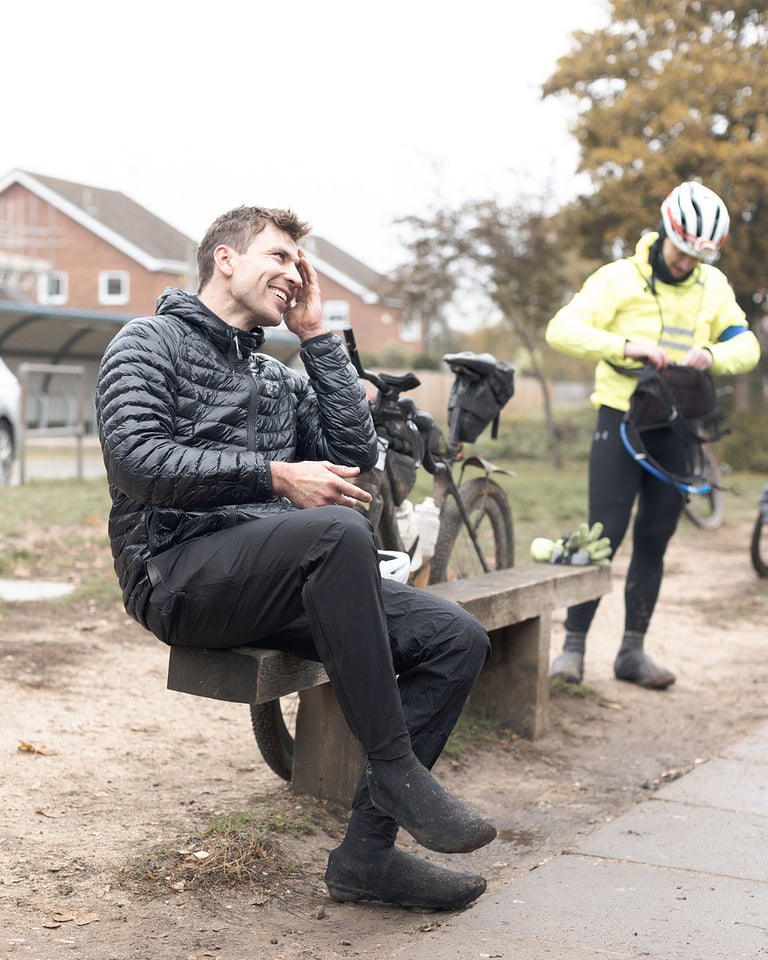 Time for a sit-down at headquarters. Photo: Alec Seaman
There's something wonderful about watching riders scratch from an event with a smile on their face. They've enjoyed the experience, learnt something and are often already thinking about what they might do differently next time.
More often than not, they're talking about coming back to see whether they can push their personal marker a little further.
That's a very different atmosphere from an event where anything short of finishing might be considered a failure. Tom's events don't glamorise suffering. There's plenty of hardship, certainly, and no shortage of physical or mental challenges, but suffering isn't something to be celebrated for its own sake. The satisfaction comes from overcoming obstacles, discovering what you're capable of and enjoying the experience along the way. There's no particular virtue in making something harder than it needs to be.
A different kind of adventure
East Anglia is sometimes overlooked by those seeking outdoor adventure. It lacks the dramatic mountain scenery that dominates so much cycling photography and the big climbs that provide convenient measures of difficulty.
But spend time exploring its quieter corners, and you'll discover ancient tracks, forgotten lanes, forests, heathland and vast expanses of open countryside. The Iceni 360 makes excellent use of these landscapes, creating an event that is as varied as it is challenging.
More importantly, it challenges the idea that adventure must be remote, expensive or difficult to access to be worthwhile.
Not everyone has the time, money or confidence to disappear into the mountains for a week. Some simply want to discover how far they can ride, what they're capable of and whether ultra-distance cycling might be for them.
Tom's approach offers a practical answer.
The inaugural Iceni 360 was undoubtedly demanding. Despite remarkably favourable weather, the mud, sand, fog and darkness presented plenty of challenges, and only three riders completed the entire distance. The lack of wind was a particular blessing, but anyone familiar with East Anglia knows better than to expect the same conditions next time.
Yet success here isn't restricted to those who rode all four loops.
It might be a first long-distance ride, a first night ride, a mechanical problem overcome, or simply the satisfaction of having attempted something new.
And perhaps the strongest measure of success is the number of riders who leave feeling they've achieved something worthwhile and are already looking forward to returning.
The Iceni 360 may be a different kind of ultra, but the adventure isn't diluted. All Pace Races has created something rather special, combining a genuine physical and mental challenge with an environment that encourages participation, celebrates individual achievement and gives riders the confidence to push their own boundaries.
For me, this is ultra-distance cycling done exceptionally well.
Words and photography: Alec Seaman
For more information about the Iceni 360 and Norfolk 360, visit All Pace Races.