Trash Free Trails: 20p deposit could cut trail litter by a quarter
Trash Free Trails volunteers have counted 740,000 bits of litter since 2019, a quarter of them bottles and cans. Its new report forecasts what next October's deposit return scheme will clear.
Trash Free Trails has put a number on what a 20p deposit could do for the places we ride. Its State of Our Trails Report for 2026, published on 12 November, forecasts 2.4 million fewer drinks containers on the UK's public rights of way by 2030. The Deposit Return Scheme it is counting on starts on 1 October 2027.
Public rights of way include the bridleways and byways we ride, and the not-for-profit's volunteers have been counting what gets left on them since 2019. Its supporters include Trek, Bosch, komoot, the Orbea Foundation and Red Bull UK. When Katherine Moore gave us her reasons to be optimistic in 2021, joining a Trash Free Trails litter sweep was on the list.
The 2.4 million is a forecast. It depends on an estimate of how much is out there now and on the scheme hitting its targets.
We've read the report and checked it against the litter surveys from Ireland, the example it leans on. We haven't been out on one of the counts ourselves.
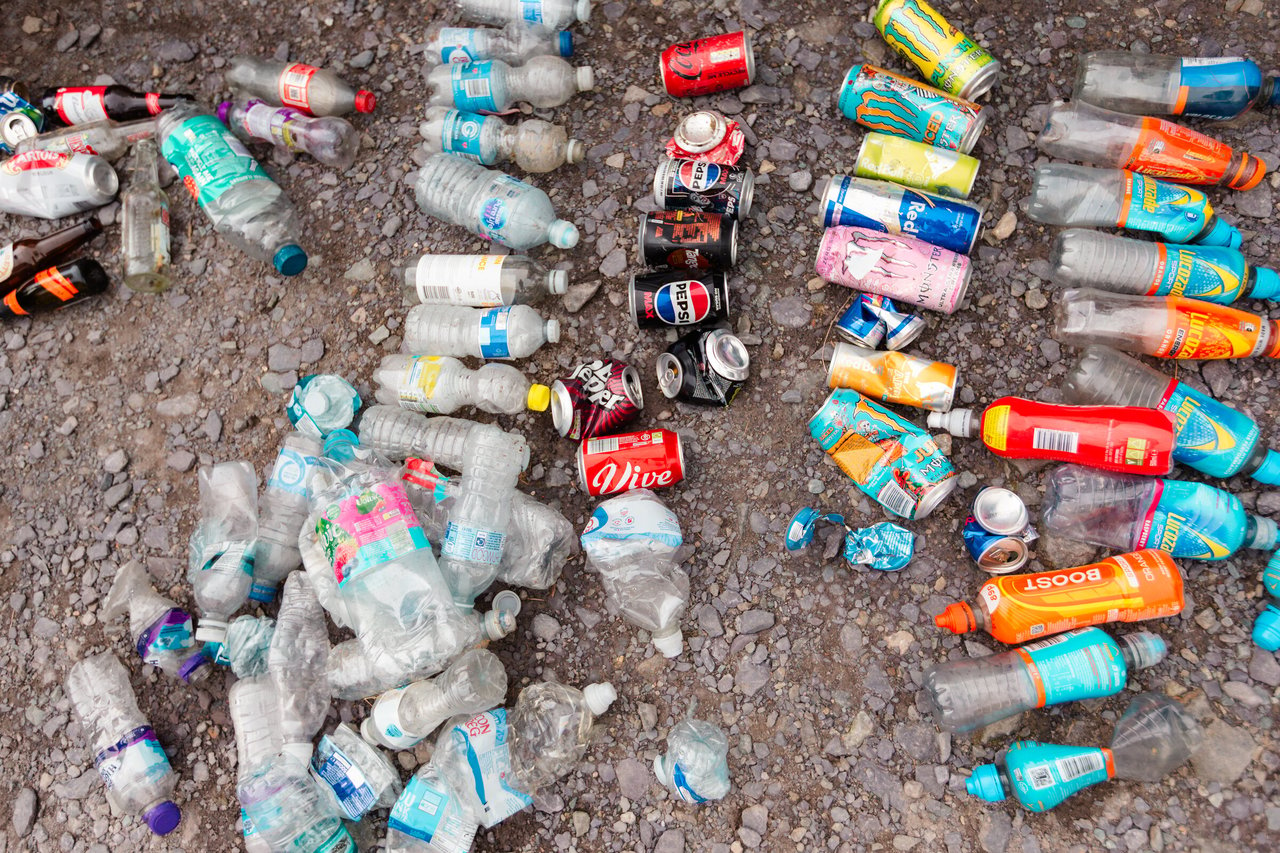
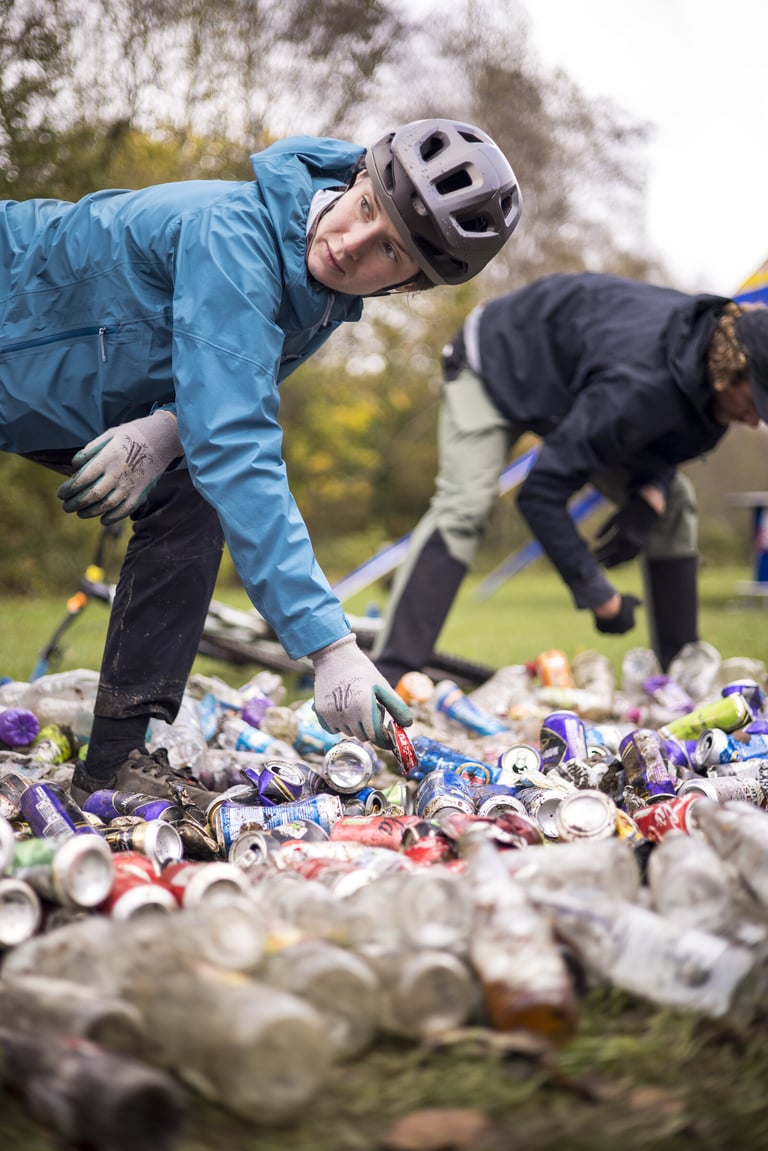 Trash Free Trails counts every can and bottle it removes. Photo: Sam Dugon
Where the 2.4 million comes from
Since 2019, 9,103 volunteers have cleaned 20,621km of trail and recorded 740,000 items of litter along the way. A quarter of those items, about 185,000, were single-use drinks containers.
From that count, Trash Free Trails estimates there are "potentially 2.7 million" more on public rights of way across the UK. This year's report doesn't show how it gets from one figure to the other.
The forecast then assumes the scheme reaches its target of a 90% return rate within three years. Nine-tenths of 2.7 million is 2.4 million, so the forecast has litter falling in step with returns. Along the way the report expects 40% fewer containers six months after the scheme starts and 70–80% fewer after a year, figures it has mapped from Ireland's scheme.
What Ireland's litter surveys found
Ireland has had deposits on bottles and cans since February 2024. Irish Business Against Litter's survey of 40 towns and cities, published 11 months later, found nearly 50% fewer plastic bottles and cans across more than 500 sites. A year on, RTÉ reported a further 10% drop.
That is the direction Trash Free Trails forecasts, though it is short of the 70–80% the report expects after a year. The Irish surveys cover towns and city streets, so they say nothing direct about trails.
The same survey is less encouraging about the report's second claim. Trash Free Trails says that with fewer bottles and cans lying about, people drop less of everything else, and it quotes a fall of up to 47% in all litter from studies of American states with bottle deposits. In Ireland, the survey found overall litter "on a par with 12 months ago".
Wildlife and glass
Volunteers recorded some interaction between animals and litter in 26% of surveys and a death in 6%, often an animal trapped inside a bottle or can. The deaths pictured in the report are voles, mice and other small mammals.
"We have hundreds of surveys each year which report evidence of animals becoming trapped in bottles and cans and dying," says chief executive Dom Ferris, "in places as remote as on Yr Wyddfa."
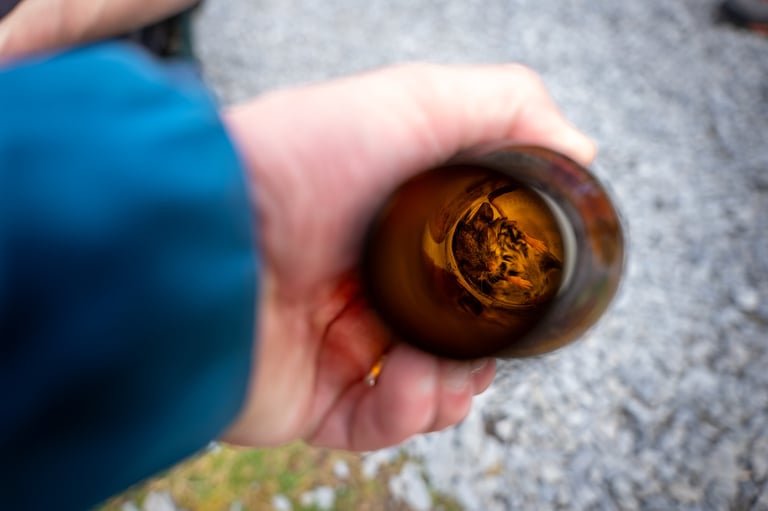 A mouse that died in a bottle on Yr Wyddfa. Photo: Joby Newson
One in ten of the drinks containers its volunteers pick up is glass, and glass is outside the scheme in England, Scotland and Northern Ireland. Wales is running its own scheme from the same month and includes glass. The Welsh Government has said glass will carry a zero-pence deposit for the first four years.
How the deposit will work
From 1 October 2027, drinks in PET plastic bottles and steel or aluminium cans between 150ml and 3L will cost 20p more. You get the 20p back when you return the empty, most often at a return point in a supermarket. Exchange for Change, a not-for-profit funded by drinks producers, runs the scheme.
For a rider, that makes the empty can from the village shop worth carrying to the next town. It may be worth someone else's while to pick up too: in a 2023 Reloop survey quoted in the report, 40% of people said they'd be likely to collect littered containers for the deposit.
Trash Free Trails wants the counts to keep coming so it can measure what the scheme does from day one, and asks people to send in data from their own trail cleans. The State of Our Trails Report is on its website.